Your Brain On Piano: Music Supports Cognitive Development
Piano lessons are more than just a fun hobby! With every song learned and every note practiced, your child is giving their brain a workout too!
As a music therapist, one of the things I love most about music is how much is happening in our brains when we engage with it. Something that may seem as simple as learning a song on the piano actually involves so many different cognitive processes working together.
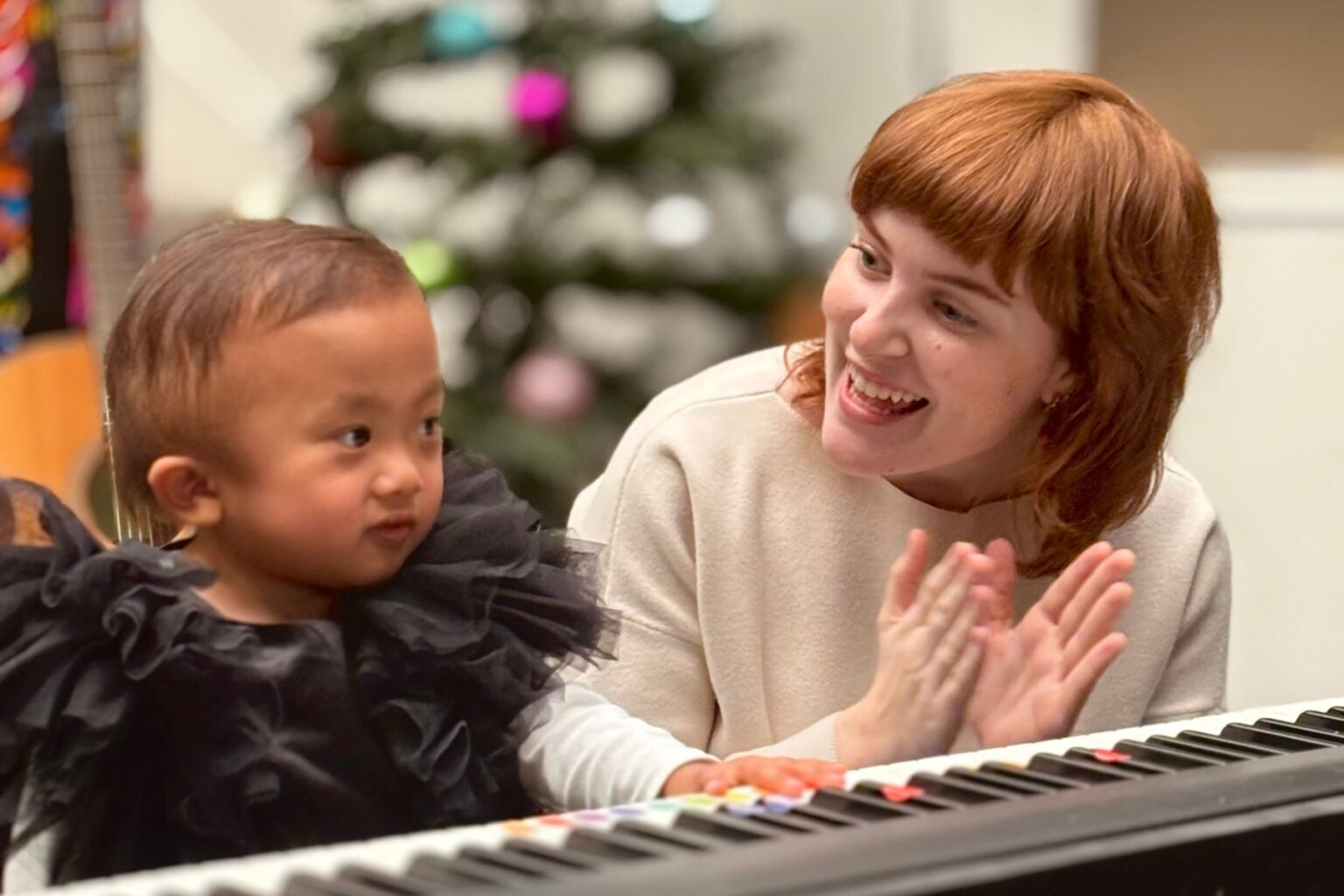
When a child sits down at the piano, they’re not just learning which keys to press. They’re listening, remembering patterns, coordinating their hands, processing information, and making decisions, sometimes all within a few seconds!
This is one of the reasons I love encouraging families to explore music lessons, even if their child has never played an instrument before.
If you’re looking for music lessons in Orange County, California, or online, we may be able to help. Contact us to learn more.
What Is Happening in the Brain When We Play Piano?
First, a student needs to pay attention to the instructor and recognize which notes to play. Then they need to remember the sequence, coordinate their fingers, and listen to what they’re playing. As they become more comfortable, we might introduce a new rhythm, use both hands, or encourage them to play without looking at their fingers.
Each of these little steps creates opportunities to practice important cognitive skills.
When a person hears a familiar song, it can spark recognition, trigger memories, and even bring back words thought to be lost. Beyond memory, music activates movement, emotion, and attention, allowing individuals to be fully present and engaged in the moment.
Attention and concentration: Staying focused on a melody, following musical instructions, and maintaining a rhythm.
Memory: Remembering notes, musical patterns, and sequences from one lesson to the next.
Executive functioning: Planning movements, recognizing mistakes, problem-solving, and making adjustments while playing.
Cognitive flexibility: Moving between different musical ideas, switching hands, or adapting when something changes.
Motor planning and coordination: Organizing movements and coordinating both hands to produce music.
And what’s exciting is that these skills are being practiced through something enjoyable and meaningful to the student.
The Goal is Music
Something I always like to emphasize is that music lessons and music therapy are not the same thing.
In music therapy, we intentionally use music to address individualized therapeutic goals. In music lessons, our goal is musical learning. We want students to learn an instrument, develop their musicianship, and experience the joy of making music.
But that doesn’t mean the learning process happens in isolation from other areas of development.
A student might be working toward playing their favorite song, but along the way they’re also practicing attention, memory, sequencing, and problem-solving.
As a music therapist, I love recognizing those connections. And as someone who believes strongly in the value of music education, I think it’s important that we don’t lose sight of the musical experience itself.
Every Student Learns Differently
One thing we’ve learned through our work at OC Music Services is that there isn’t just one way to teach music.
Some students learn best through reading notes. Others benefit from colors, visual supports, repetition, listening, or breaking a song into smaller sections.
Our music educators and music therapists understand the importance of meeting students where they are, identifying their strengths, and finding ways to make learning accessible and engaging.
Sometimes that means slowing things down. Sometimes it means finding a song they’re really excited about. And sometimes it means celebrating the accomplishment of playing just a few notes independently.
Those moments matter because they build the foundation for continued learning.
Is Learning Piano Worth It?
Absolutely!
Not because playing piano automatically makes someone smarter, but because learning an instrument offers a meaningful way to challenge the brain, develop musical skills, and build confidence.
And perhaps my favorite part is watching students realize what they’re capable of. A song that once seemed difficult slowly becomes familiar, and eventually they’re playing something they never thought they could.
If you’ve been thinking about music lessons for your child, I encourage you to give it a try. They don’t need to have previous experience or demonstrate a particular musical ability to get started.
Interested in getting started? Reach out to learn more about our piano lessons and current enrollment openings!
Contact us to start lessons or learn more. We are available in Orange County and online.
Music has the power to transform lives.
Lety Castillo, OCMS Founder
Lety Castillo is the founder of OC Music Services (OCMS), created from her belief in music’s powerful ability to transform lives when guided by the right support and environment. Her clinical and educational philosophy centers on empowerment, with a deep commitment to the idea that every individual has the capacity to learn, grow, and adapt at any stage.